
Sub-Total: $0.00
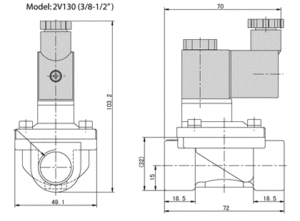
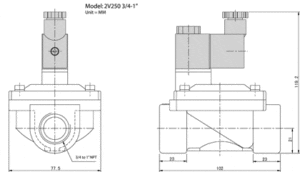
Solenoid Valve Specifications and Dimensions: 2V130-250 Series
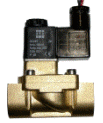
Price range: $258.47 through $360.34
Port Size (NPT)
2V130-3/8
2V130-1/2
2V250-3/4
2V250-1
Voltage (Explosion Proof)
1-E = 12VDC
2-E = 24VDC
3-E = 110VAC
4-E = 220VAC
Electrical Connection
200C Explosion Proof Coil
Cv/Orifice
Cv = 4.8
Orifice = 13mm
Cv = 4.8
Orifice = 13mm
Cv = 12
Orifice = 25mm
Cv = 12
Orifice = 25mm
Services
Air, Liquid, Oil, Water
Features
2 Way Pilot Operated Diaphgram
Normally Closed
Brass Valve Body
Operating Temp: 14 to 176°F (with NBR Seal), 5 to 248°F (with Viton Seal)
Operating Pressure: 5 to 115PSI
Option: 5 to 150PSI
Coil Power: 3 to 6.5W
Description
Specifications
| Valve Model | 2V130-3/8 | 2V130-1/2 | 2V250-3/4 | 2V250-1 |
| Valve Type | 2 Way Normally Closed (NC) | |||
| Action | Pilot Lift Diaphragm | |||
| Cv (Orifice) | 4.8 (13mm) | 4.8 (13mm) | 12 (25mm) | 12 (25mm) |
| Operating Pressure | 5 to 115 PSI, 5 to 150PSI (with high power coil) | |||
| Operating Temperature | NBR Seal: 14 to 176°F (-10 to 80°C)
Viton Seal: 5 to 248°F (-16 to 120°C) |
|||
| Port Size (NPT) | 3/8″ | 1/2″ | 3/4″ | 1″ |
| Body Material | Brass | |||
| Seal Materials | NBR (Option: Viton) | |||
| Coil Protection Insulation Class | F Class IP65; Option: Explosion Proof Coil | |||
| Coil Duty | 100% ED | |||
| Coil Power | 3 to 6.5W | |||
| Electrical Connections | DIN | |||
| Voltages / Tolerances | 12VDC, 24VDC, 24VAC, 110VAC, 220-230VAC (50-60Hz)
Voltage Tolerances: +10%-5% for DC, +10%-15% for AC |
|||
| Coil Certifications | Standard: CE; Options: UL/CSA, FM Explosion Proof | |||
| Service | Air, Liquid, Vacuum, Steam (with Viton seal) | |||
2V130-250 Series 2/2 Pilot Operated Diaphragm Normally Closed Solenoid Valve:
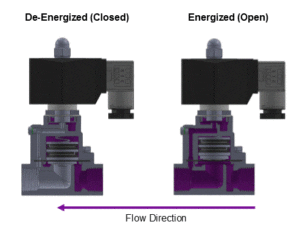
This valve is a two-way, normally closed, pilot-operated diaphragm valve. As shown in the diagrams below, when the coil is de-energized (left diagram), the pilot plunger and diaphragm sit on their respective orifices. The working medium flows through a tiny “bleed orifice” and pressurizes the cavity above the diaphragm – this system pressure, along with the spring force, seals the valve. When the valve is energized, the pilot plunger allows the working medium to flow through the pilog orifice. This releases the pressure above the diaphragm and causes it to lift off of the main orifice, allowing the working medium to flow fully through the valve. Since the bleed orifice is dimensionally smaller than the main orifice, the system pressure cannot rebuild on the top of the diaphragm as long as the main orifice remains open. The working medium and flow direction are indicated in purple in the diagrams.
ALL standard valves are supplied with Continuous Duty Coils of the proper class of insulation for the service indicated on the valve. It is normal for the coil temperature may become hot after being energized for extended periods. Smoke or burning odor indicates excessive coil temperature and the power should be disconnected to the coil immediately.
SERVICE LIFE: The service life of the solenoid valve depends on the operating conditions such as pressure, temperature, type of medium, and the voltage.
Electrical Coil Connections
-
- To Connect a DIN Coil:
- Remove the Philips screw from the plastic housting & unplug from the DIN coil.
- Use the removed screw to push the terminal block out of the plastic DIN housing.
- Note the “1”, “2”, and ground “⏚” symbols.
- For DC DIN Coils, connect “1” to your positive lead and “2” to your negative lead.
- For AC DIN Coils, connect “1” to your HOT lead, “2” to your NEUTRAL lead, and “⏚” to your ground lead, if required.
- To Connect a DIN Coil:
- To Connect a Grommet Coil:
- For DC Coils, connect the red wire to your positive lead and the black wire to your negative lead.
- For AC Coils, connect the black wire to your HOT lead and the white wire to your NEUTRAL lead.
- For Coils provided with Molded Cables, the color of the wire indicates the type of lead:
- GREEN = Ground Wire
- BLUE = Positive or HOT Wire
- BROWN = Negative or Neutral Wire

Downloads:
Additional information
| Part No. | 2V130-3/8, 2V130-1/2, 2V250-3/4, 2V250-1 |
|---|
Related products
-

4-Way, 5-Port, 2-Position (5/2) Pneumatic Solenoid Valve: 4V110-1/8
$47.09 Add to cart -
Solenoid Valve Specifications and Dimensions: 2T060 Series
Price range: $198.65 through $477.44 Select options This product has multiple variants. The options may be chosen on the product page -
Miniature Chrome-Plated Brass Ball Valves(T400)
Price range: $6.72 through $8.62 Select options This product has multiple variants. The options may be chosen on the product page -
2-Way, 2-Position (2/2) Direct Acting Normally Closed (NC) Plastic Solenoid Valve
$34.37 Select options This product has multiple variants. The options may be chosen on the product page
Reviews
There are no reviews yet.